
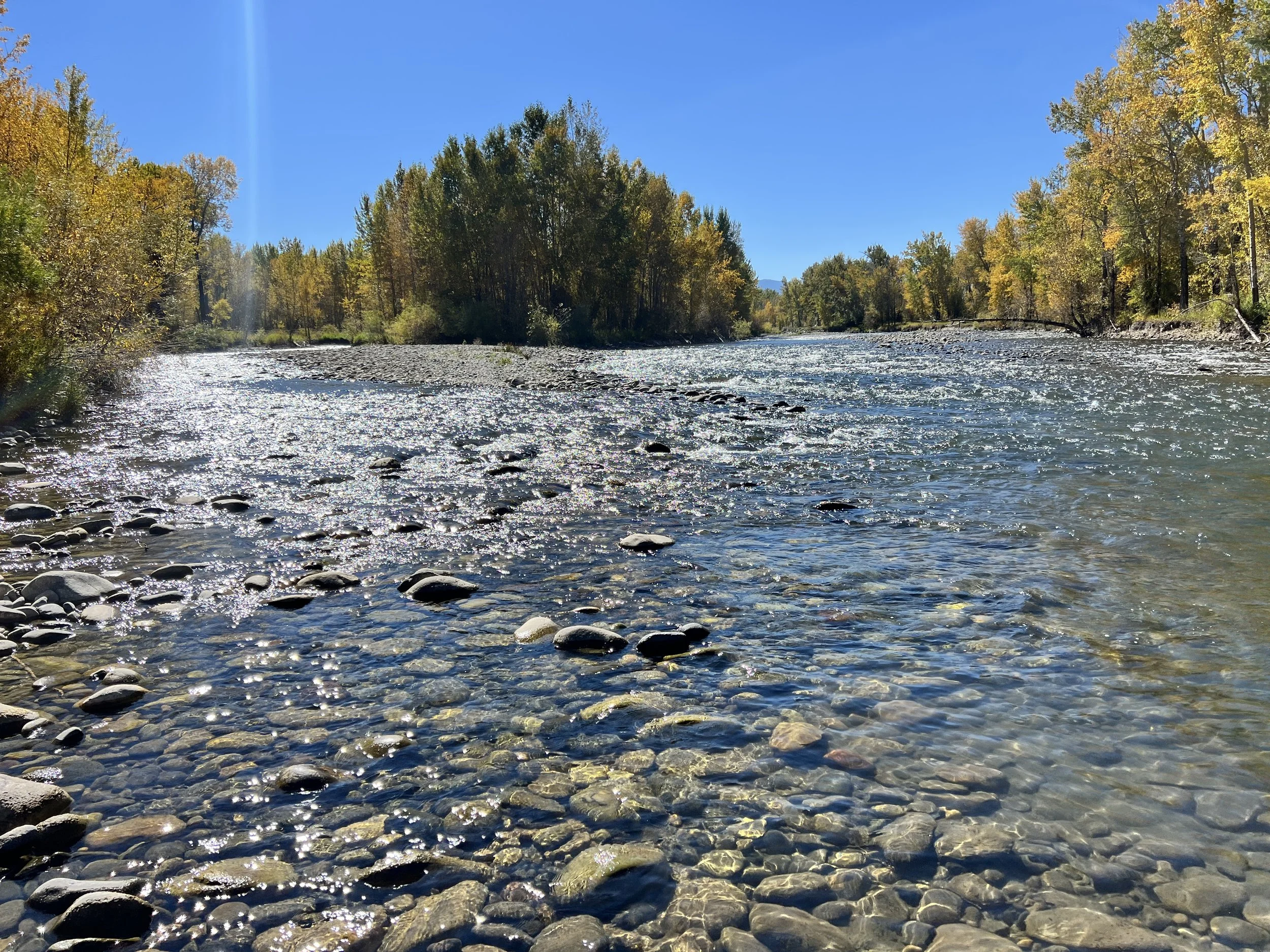
Gallatin River Fly Fishing Guide
Fly Fishing the Gallatin River
Where, When, and What to Cast in Bozeman’s Backyard
The Gallatin River is one of Southwest Montana’s most accessible and diverse trout fisheries, making it a favorite destination for anglers fishing with our experienced Gallatin River fly fishing guides. Located just minutes from Bozeman, the Gallatin flows from Yellowstone National Park through the Gallatin Canyon and into the open valley, offering a wide range of fly fishing opportunities throughout the season. This blue-ribbon river supports healthy populations of wild rainbow and brown trout and features everything from fast, technical pocket water near Big Sky to slower riffles and runs in the lower valley. Understanding when, where, and how to fish the Gallatin is key to success, and its ever-changing character rewards anglers who adapt their approach to the river’s seasonal conditions.
Why Fish the Gallatin River?
The Gallatin River is known for its clear waters, stunning scenery, and healthy populations of wild rainbow, brown, and cutthroat trout. As a freestone river, it provides dynamic fly fishing opportunities that change with the seasons. Plus, its accessibility from Bozeman, Big Sky, and even Yellowstone National Park makes it a prime destination for anglers from around the world.
Best Fly Fishing Spots on the Gallatin River
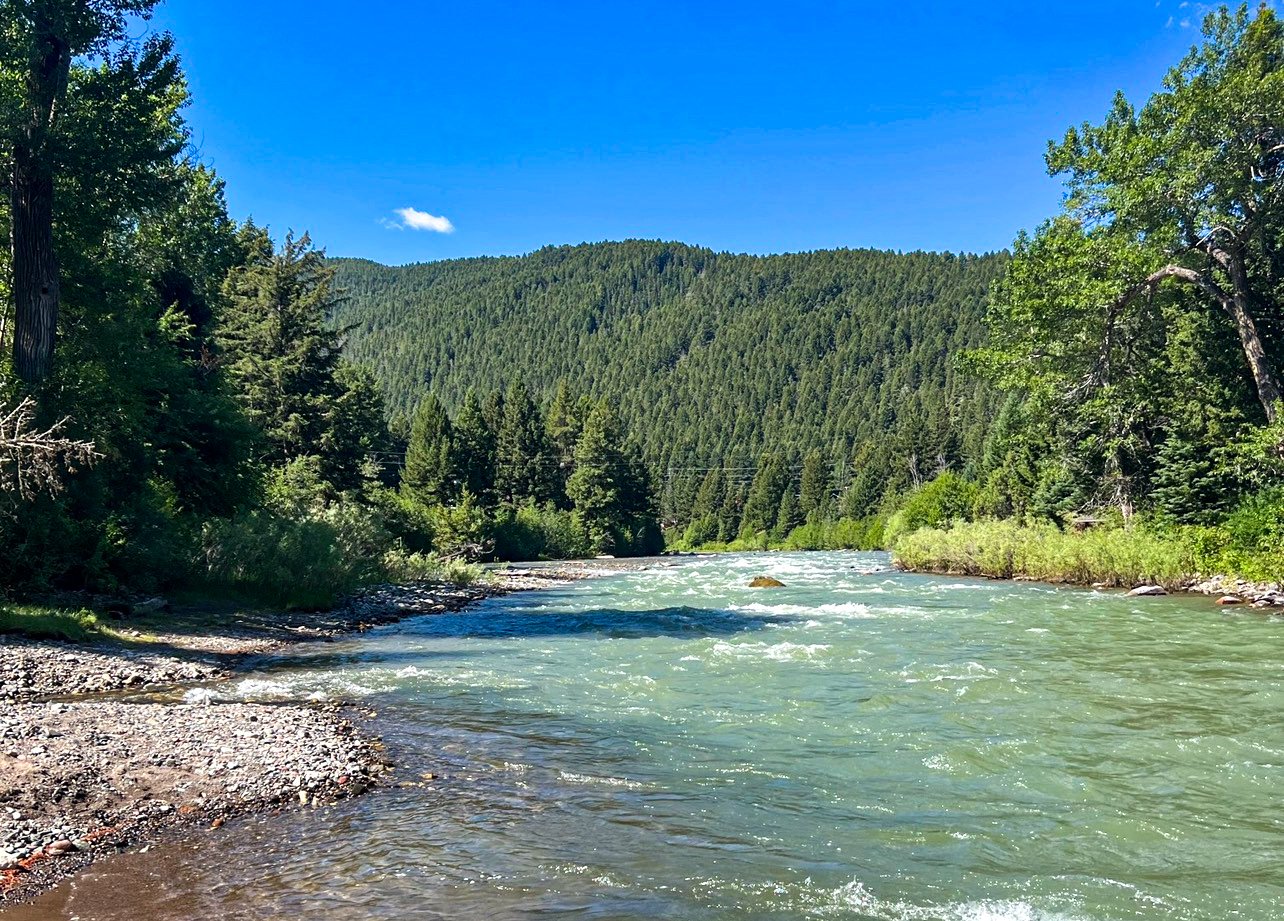
Gallatin Canyon (Big Sky to Four Corners)
This stretch offers some of the most dramatic and productive fishing. Pocket water, deep runs, and riffles hold trout year-round. The canyon accesses are very easy to find, since most of it is in national forest. There are plenty of pull offs on the side of the road, just be sure to follow Montana’s stream access laws. One of our favorite ways to fish this section is with a dry-dropper rig. For dry flies we try Caddis, Pmd’s, Chubby Chernobyl’s and other attractor flies. For nymph’s we really like stone fly patterns like rubberlegs, also caddis and mayfly nymphs like the shop vac and the green machine. This section gets a spruce moth hatch in the summer that can be a blast for evening dry fly fishing.
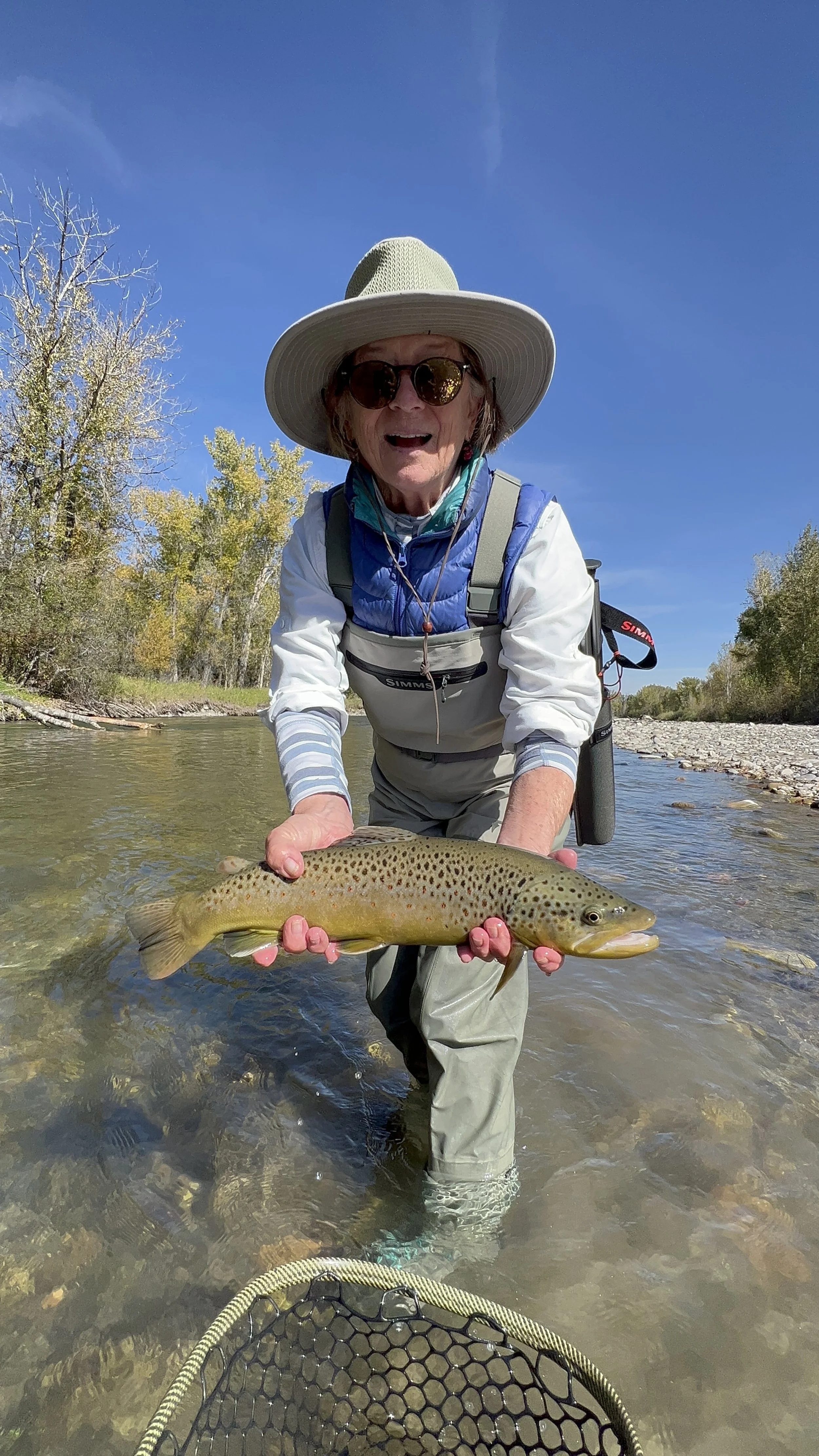
Between Bozeman and Gallatin Gateway
Easy to wade and access, this area is great for beginners or those looking for close to town option for a few hours. Most of the accesses are marked by state fishing access site signs and can be found online at the Montana FWP Site. You’ll find plenty of action with hoppers, PMDs, and caddis during the summer months. Fish the deep buckets below riffles and you’ll find a bunch of hungry trout. Some of our favorite flies for this section are smaller Chubby chernobyls and other attractor flies, as well as PT’s, Rubberlegs, and prince nymphs for subsurface flies. This section also fishes great in the spring before runoff and in the fall when the weather gets cooler.
Easy Access Points - Gallatin Gateway, Axtell Bridge, River Rd, and Cameron Bridge

Headwaters Near and In Yellowstone National Park
Near the confluence with the Taylor Fork, the upper Gallatin is cold and clear—ideal in the summer and early fall. This section offers gorgeous views and a smaller meandering river fishing experience in the YNP section. This is a great spot to fish dry flies in the summer. From Salmonflies to Hoppers, you’ll find fish eager to eat a dry fly in this section. Caddis, and Mayfly dries and nymphs work great all summer long. Like the canyon there are sections that are in the national forest but also sections that are in Yellowstone National Park, so beware of the section you are in and have the proper license. If you are fishing in YNP you need a separate fishing license for the park, also be bear aware and carry bear spray.

Lower Gallatin River (Bozeman to the confluence with the Missouri)
Lower Gallatin River, this stretch winds through open meadows, cottonwood-lined banks, and riffle-filled runs teeming with wild rainbow and brown trout. It’s easily accessible, with plenty of state fishing accesses and bridges for access. Making it a favorite for both half day wade trips and quick after-work sessions. As the river meanders through the valley, it gradually widens and slows. The lower section from Nixon Bridge to Headwaters State Park becomes floatable during moderate to higher flows, offering a unique opportunity to cover more water. -Be aware that post-runoff conditions can bring river hazards such as snags, logjams, and strainers. If you plan to float this section, do so with caution and always scout ahead before committing to unfamiliar channels.
Gallatin River by the Seasons
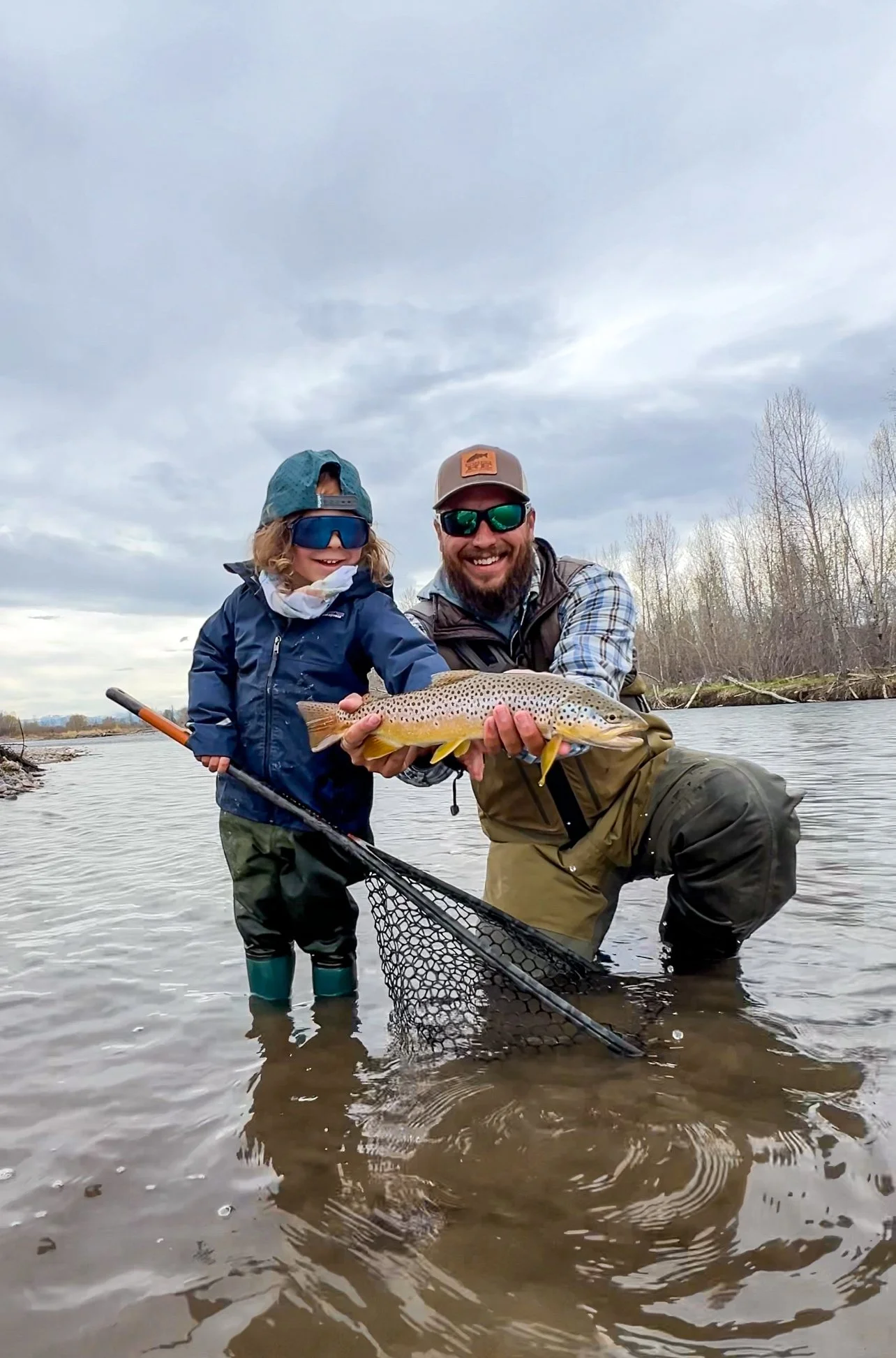
Spring (April – June): Early Opportunity & Runoff Challenges
Early Spring (April – Early May)
Pre-runoff windows in April and early May can offer excellent dry fly fishing when water stays low and clear. Early hatches include midge clusters, Blue Winged Olives (BWOs), and March Browns on calm, overcast days. Trout will rise selectively — great for small dry flies and light leaders.
Techniques: Indicator nymph rigs with small baetis and midge patterns; tight dry fly presentations near seams on calm afternoons.
Runoff Period (Mid-May – Mid/Late June)
Snowmelt runoff typically ramps up by late May, making the main river choppy and off-color for a time. Clarity and fishability often improve only in side channels, back eddies, and slower water early in this period. Hatches: Early emergences of caddis (“Mother’s Day caddis”) can light up the river when conditions permit — but timing around runoff is unpredictable.
Techniques:
Heavy stonefly nymphs tight to banks and structure
Streamers in backwater slack edges
Be patient — look for stable water windows between runoff pulses.
Late Spring / Early Summer (Late June)
Once flows drop enough and clarity returns, the Gallatin comes alive. Expect Salmonflies (late June/Early July), Golden Stones, Pale Morning Duns (PMDs), and abundant caddis throughout this transitional period. Trout feed aggressively once the river stabilizes.
Dry flies dominate; big stonefly dries and caddis patterns are must-haves.
Summer (July – September): Peak Action & Big Dry Fly Days
Early to Mid-Summer (July)
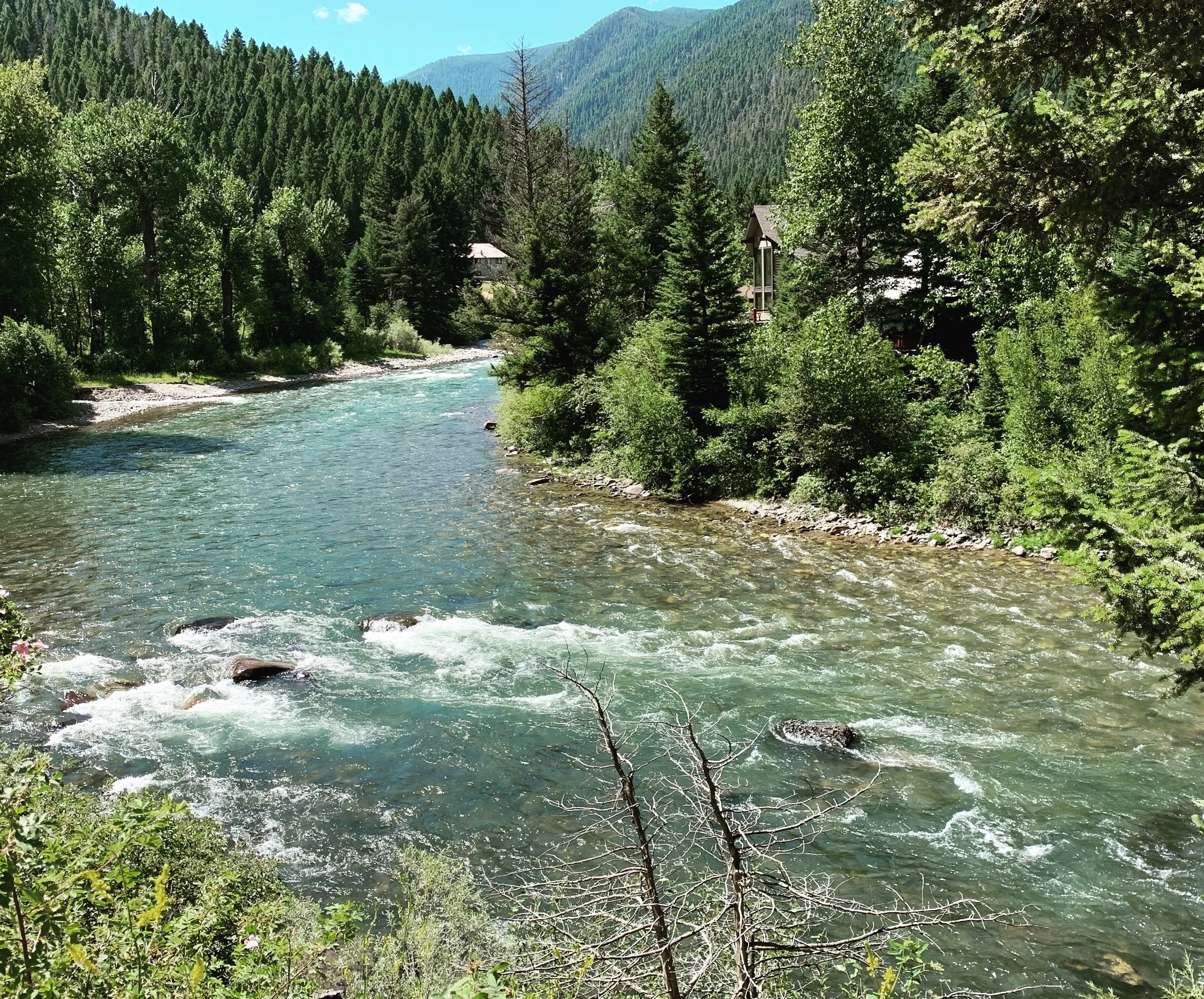
By July, snowmelt runoff is usually gone, flows are clear and fishable, and insect life explodes. Expect strong hatches of PMDs, caddis, and smaller stoneflies.
This is prime dry-fly territory — long warm days bring fish up throughout the day.
Techniques & Tactics:
Dry flies to structure in riffles, seams, and pocket water
Streamer fishing early morning/late evenings for bigger browns
Dry-dropper rigs if fish aren’t actively rising.
Where they feed: Trout distribute through riffles, runs, and pockets where food is abundant.
Late Summer (August)
Water stabilizes and clears. Hatches get a bit sparser — trico mayflies, grasshoppers, ants, beetles, and spruce moths become key.
Techniques:
Early morning is best for mayflies and terrestrial action.
Switch to terrestrials as the day warms.
Nymph rigs remain productive in deep riffles.
Transition to Fall (September)
Early September still feels like summer: grasshopper action and terrestrial dry fly opportunities persist. Later in the month, Blue Winged Olive (BWO) hatches kick in and fish shift into more fall-like feeding behavior.
Streamer opportunities increase as brown trout gear up for fall.
Fish behavior and tactics can change dramatically within weeks as weather cools.
Fall (October – November): Cooler Water & Big Fish Opportunities
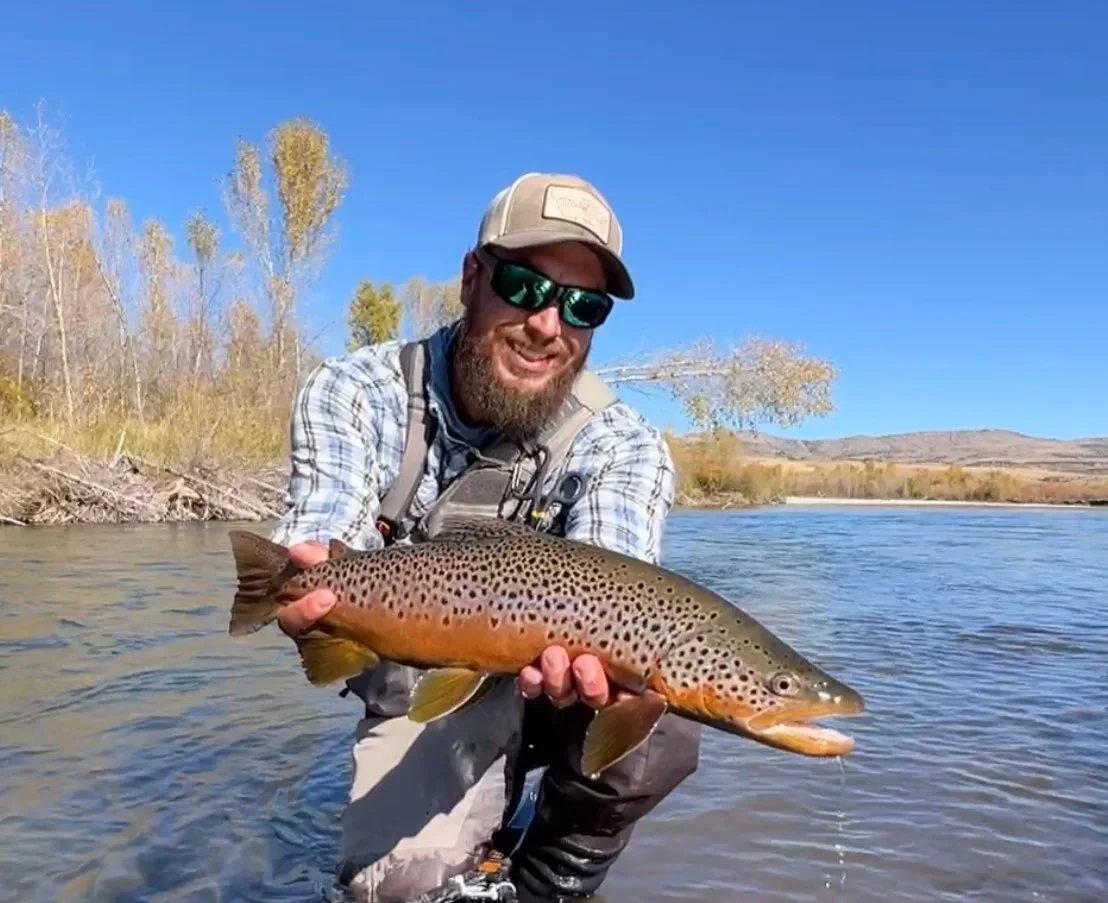
Early Fall (October)
Cooler water brings more aggressive feeding behavior across the river. Blue Winged Olives become a regular hatch, and trout eagerly take nymphs and small dries in slower water and seams.
Techniques:
Streamer fishing through runs and deeper holes pays off big for brown trout
Large stonefly/bug patterns fished subsurface.
Late Fall (November)
As temperatures drop, aquatic insect activity dwindles, but trout continue to feed hard ahead of winter. Midday nymphing and slow dragging streamers can trigger strikes.
Crowds thin significantly — giving anglers solitude and focused fish.
Winter (December – March): Hidden Gem Season
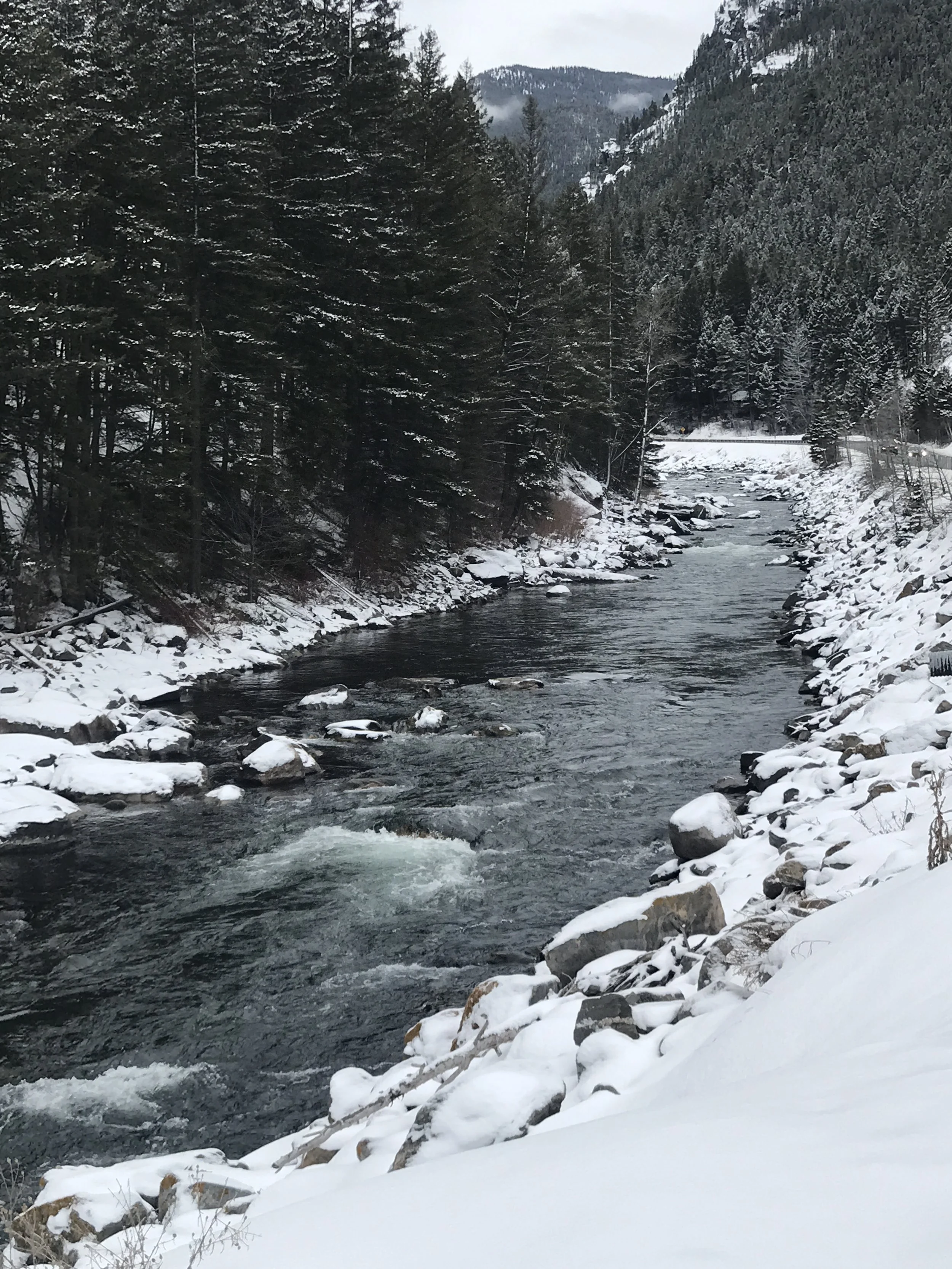
Winter Conditions
The Gallatin remains fishable most of winter, especially mid-day when insects like midges hatch sporadically. Days with mild weather can see surface activity from rising trout — rare in winter but rewarding.
Techniques & Patterns
Subsurface nymph rigs are the bread-and-butter:
Zebra midges, Ruby Reds, Pheasant Tails, Prince Nymphs
Longer leaders and lighter tippets help presentations at depth.
Dry fly action — if it happens — is most likely mid-day on milder, overcast days.
Why Fish Winter?
Fewer anglers, predictable fish behavior, and peaceful scenery make winter a unique season to chase trout.
Waters near Big Sky with reliable spring flows often provide some of the most consistent winter fishing on the river.
Tips from a Bozeman Fly Fishing Guide
Watch river flows: We monitor discharge from the USGS gauge to pick the best fishing spots daily.
Match the hatch: Know what’s hatching—stop by a local fly shop for up-to-date fly suggestions.
Wade safely: The canyon stretch is rocky and the water can be swift. Good boots and a wading staff make a big difference.
Hire a local guide: A guide knows how to read water, pick the right flies, and elevate your experience.
Best Fly Patterns for the Gallatin River (By Season)
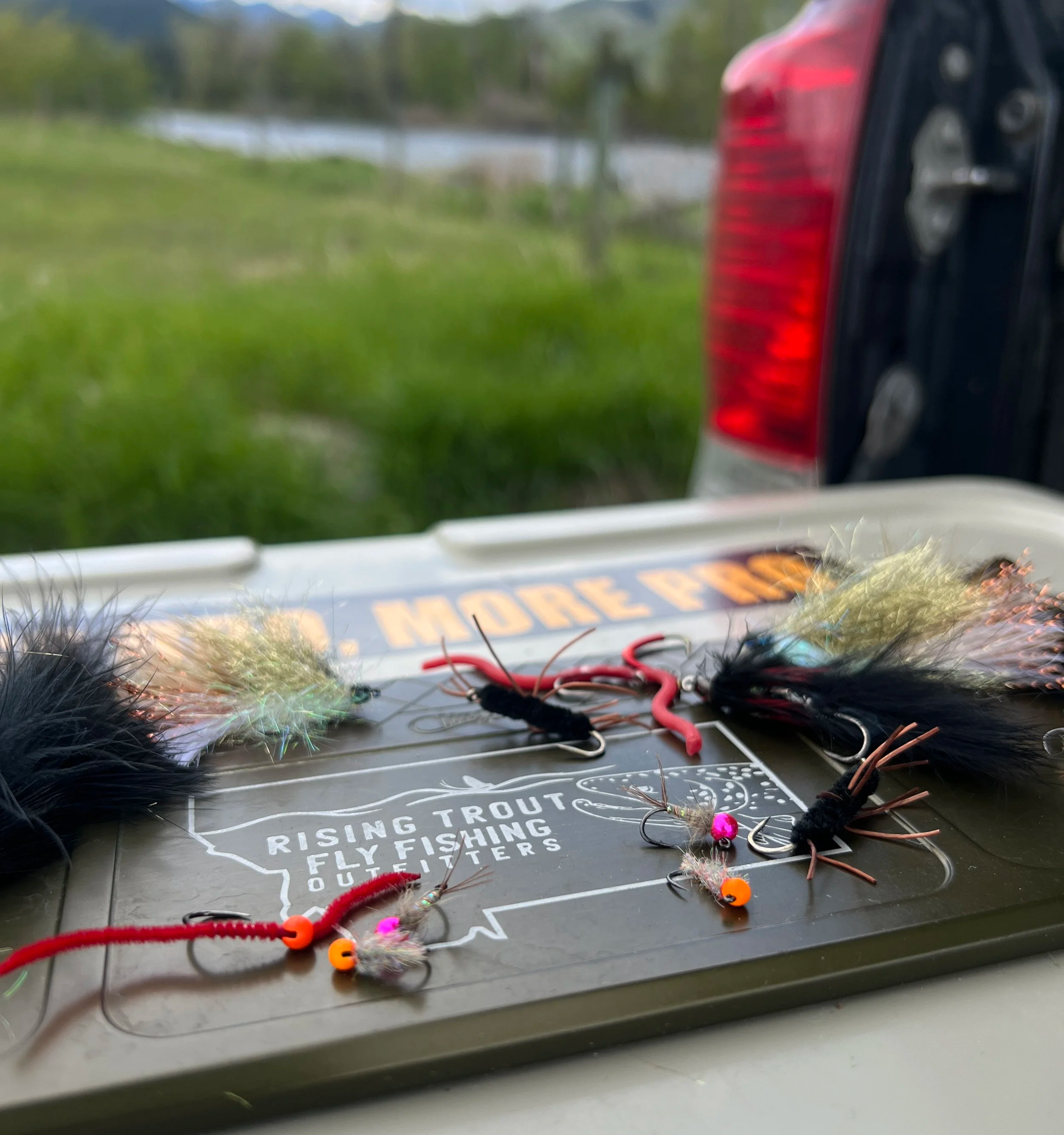
The Gallatin is a classic Montana freestone with fast pocket water, riffles, cutbanks, and deep runs that reward anglers who fish season-specific, realistic patterns. Below is a season-by-season breakdown of the most effective fly patterns we rely on when guiding the Gallatin—covering dries, nymphs, and streamers that consistently produce fish throughout the year.
Spring (April-June): Pre-Runoff, Baetis & Mother’s Day Caddis
Spring on the Gallatin is defined by cold mornings, warming afternoons, and a mix of midges, baetis, early caddis, and stoneflies. Before runoff, fishing can be excellent with the right bugs and good depth control.
Best Gallatin River Dry Flies – Spring
Extended Body BWO (Sz 16–20) – A reliable baetis imitation when fish are rising subtly in slower seams.
Purple Haze (Sz 16–20) – Great visibility and deadly during cloudy spring afternoons.
Griffith’s Gnat (Sz 18–22) – Covers clustered midges during calm conditions.
CDC BWO Dun (Sz 18–20) – Ideal for technical spring baetis hatches.
Elk Hair Caddis (Tan/Olive, Sz 14–16) – Especially effective during the Mother’s Day Caddis emergence.
Best Nymphs – Spring
Pat’s Rubber Legs (Sz 8-14) – A staple Gallatin lead fly that imitates stoneflies and adds weight.
CDC Flash Back Pheasant Tail (Sz 14–18) – Matches baetis nymphs perfectly in spring.
Hare’s Ear Nymph (Sz 14–18) – Versatile and effective in varying flows.
Zebra Midge (Black/Red, Sz 18–22) – Essential for cold mornings and slower water.
Frenchie/Euro Perdigon (Olive/Brown, Sz 14–18) – Gets down fast in heavy current and pocket water.
Best Gallatin River Streamers – Spring
Woolly Bugger (Olive/Black, Sz 4–8) – Productive when water has a little color.
Sculpzilla Mini (Sz 4–6) – A strong choice for deeper runs and banks.
Thin Mint / Leech-Style Streamer (Sz 6–10) – Subtle movement in cold water.
Sparkle Minnow (Natural/Olive, Sz 4–8) – Great search streamer before runoff.
Mini Dolly Llama (Sz 10) – Great Sculpin Pattern.
Summer (July–September): Dry-Fly Season & Terrestrials
Summer is prime time on the Gallatin, with consistent dry-fly fishing, heavy caddis activity, stoneflies, and terrestrials. Early mornings and evenings are best, but fish will eat all day with the right presentation.
Best Gallatin River Dry Flies – Summer
Elk Hair Caddis (Tan/Olive, Sz 14–16) – A must-have all summer long.
Yellow Sally Dry (Sz 10–14) – Matches summer stonefly activity.
Spruce Moth (Sz 12–16) – A Gallatin favorite in late July.
Chubby Chernobyl (Tan/Golden, Sz 8–12) – Excellent hopper and stonefly imitation.
Thunder Thigh Hopper (Sz 8–12) – Perfect for fishing grassy banks and cutbanks.
Best Gallatin River Nymphs – Summer
Prince Nymph (Sz 12–16) – Productive attractor nymph in faster water.
PMD Nymph/Frenchie (Sz 16–18) – Key pattern during mid-summer mayfly hatches.
Lightning Bug/Spanish Bullet (Sz 14–18) – Effective when fish refuse dries.
Green Caddis Pupa (Sz 14–18) – Deadly when adults are fluttering but fish stay subsurface.
Split-Case PMD Nymph (Sz 16–18) – Great dropper under a dry-dropper rig.
Best Gallatin River Streamers – Summer
Sculpin Pattern (Olive/Tan, Sz 4–8) – Fish tight to banks and structure.
Conehead Woolly Bugger (Sz 4–8) – Effective early and late in the day.
Mini Dungeon (Sz 4–6) – Moves fish in deeper summer runs.
Thin Profile Baitfish Streamer (Sz 6–10) – Best in clear, low water.
Leech Pattern (Black/Olive, Sz 6–10) – Especially productive on overcast days.
Fall (October–November): BWO Hatches & Aggressive Browns
Fall brings cooler water, fewer anglers, and some of the most consistent fishing of the year. Blue Winged Olives dominate, and brown trout become more aggressive as winter approaches.
Best Gallatin River Dry Flies – Fall
BWO Parachute (Sz 18–22) – The go-to fall dry fly.
CDC BWO Emerger (Sz 18–22) – Deadly during light surface feeding.
Griffith’s Gnat (Sz 18–22) – Covers lingering midges.
Parachute Adams (Sz 18–20) – Reliable search pattern.
Brooks Spout Baetis (Sz 18–22) – Excellent during calm afternoons.
Best Gallatin River Nymphs – Fall
BWO Nymph (Sz 18–22) – A fall essential for consistent eats.
Zebra Midge (Sz 18–22) – Works all day once water cools.
Small Stonefly Nymph (Sz 10–14) – Great lead fly in deeper runs.
Spanish Bullet Nymph (Sz 16–18) – Slim, heavy, and perfect for depth.
Pheasant Tail Soft Hackle (Sz 16–18) – Excellent during emergence periods.
Best Gallatin River Streamers – Fall
Sculpzilla (Sz 4–6) – Targets larger browns in deeper water.
Sparkle Minnow (Sculpin/JJ’s, Sz 4–8) – A fall favorite.
Conehead Leech (Sz 6–10) – Slow and effective in cold water.
Mini Dungeon (Sz 4–6) – Big profile for aggressive fish.
Mini Dolly LLama (Sz 10) – Works well swung or stripped.
Winter (December–March): Midges & Slow Presentations
Winter fishing on the Gallatin is technical but rewarding. Trout feed selectively, and success comes from fishing small flies slowly in deeper, softer water during the warmest part of the day.
Best Gallatin River Dry Flies – Winter
Griffith’s Gnat (Sz 18–20) – Covers tiny winter midge hatches.
CDC Midge (Sz 18–20) – Excellent in calm slicks.
Parachute Adams (Sz 16-18) – Works as a subtle mayfly or midge adult.
Black Midge Cluster (Sz 18–20) – When fish key on grouped midges.
Brooks Sprout Beatis (Sz 18-20) – For rare late-winter baetis activity.
Best Gallatin River Nymphs – Winter
Zebra Midge (Black/Red, Sz 18–20) – The most consistent winter producer.
Egg Patterns – Slush eggs or Otter Eggs
Pat’s Rubber Legs (Sz 10–14) – Excellent lead fly to get depth.
San Juan Worm (Sz 10–14) – Especially after warm-ups or light snowmelt.
Czech-Style Sow Bug (Sz 16–18) – Effective in slower winter water.
Best Gallatin River Streamers – Winter
Small Leech Pattern (Sz 8–12) – Slow, subtle movement is key.
Thin Baitfish Streamer (Sz 6–10) – Fish deep and slow.
Woolly Bugger (Sz 8–10) – Downsized for cold water.
Micro Sculpin (Sz 8–10) – Targets lethargic winter trout.
Balanced Leech (Sz 10–12) – Excellent under an indicator in deep pools.
Gallatin River Fishing Reports & Current Conditions
River conditions on the Gallatin River can change quickly with weather, snowmelt, and seasonal hatches. Before booking a trip or heading out, it’s always a good idea to check the latest Gallatin River fishing report for up-to-date information on flows, water clarity, weather trends, and what’s fishing best right now. We update our reports regularly to help anglers plan smarter days on the water and choose the best sections and techniques based on current conditions.
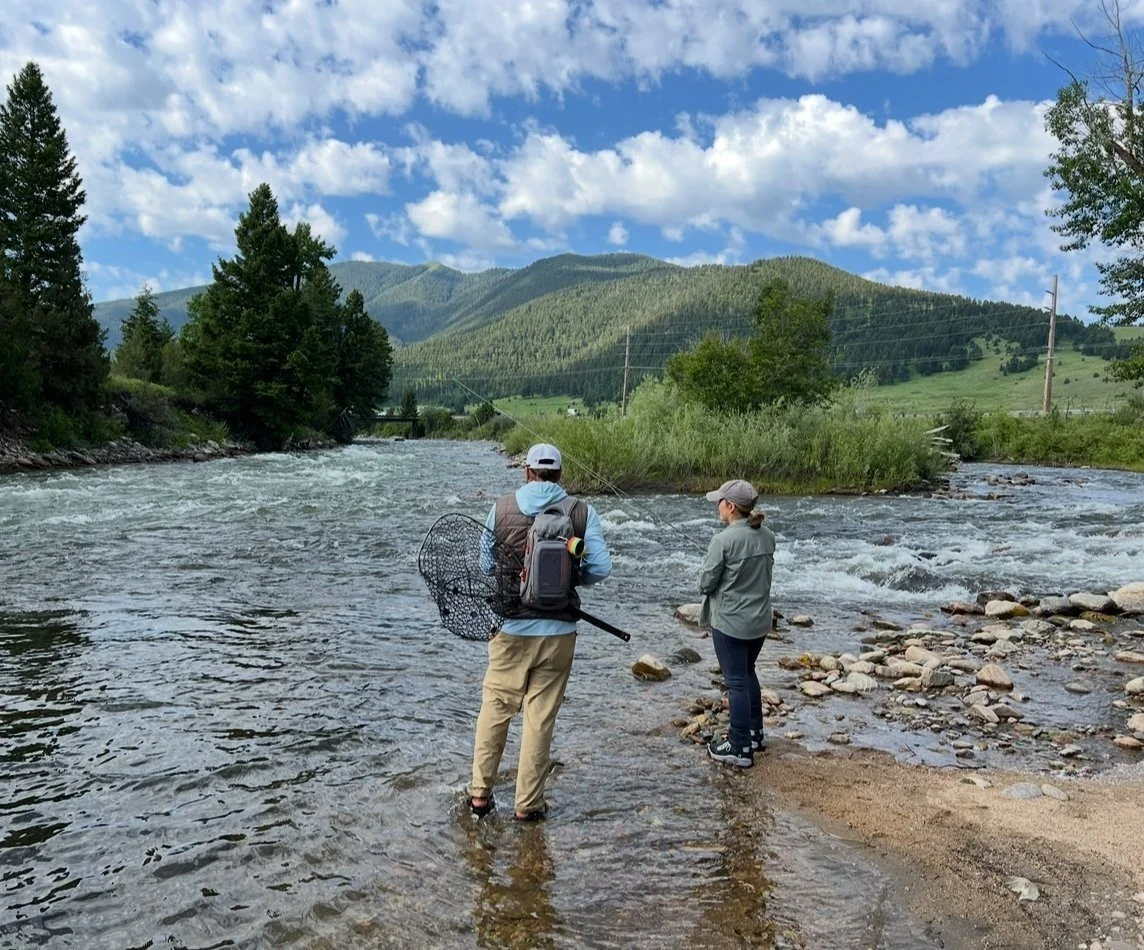
Gallatin River Fly Fishing Guide Trips
At Rising Trout Fly Fishing Outfitters, our Gallatin River guide trips offer a personalized Montana fly fishing experience built around your skill level and goals. From the fast pocket water of the Gallatin Canyon to classic walk-and-wade sections through the Gallatin Valley, our experienced guides focus on putting you in the best water at the right time while teaching effective techniques like nymphing, dry-dropper rigs, and dry fly presentations during seasonal hatches. Each guided fly fishing trip on the Gallatin River includes expert instruction, local insight, and top-quality gear if needed, making it a great option for both first-time anglers and seasoned fishermen looking to fish one of Southwest Montana’s most accessible trout rivers.